Does Coffee Break a Fast? What Studies Show
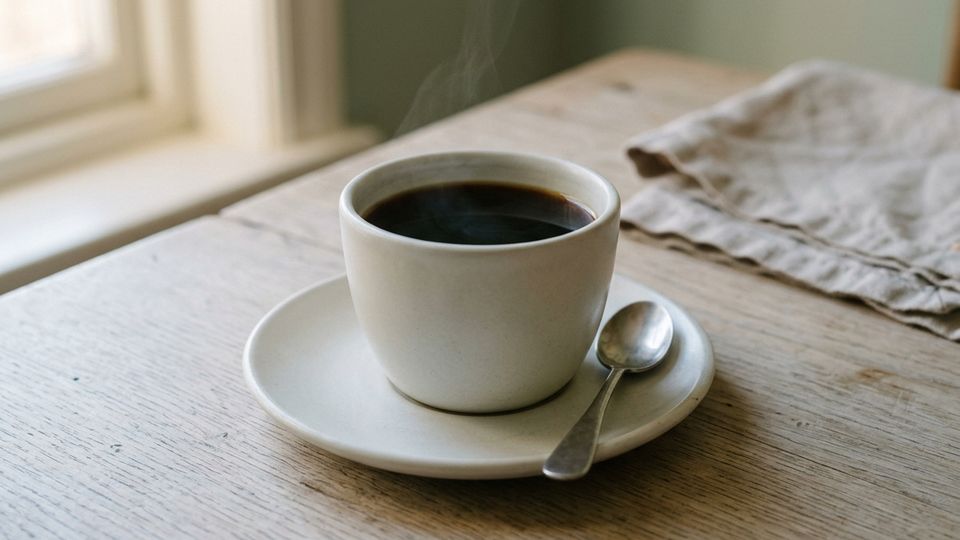
Black coffee on its own has about 2 calories a cup, and in a small trial it did not change blood glucose 30 minutes after drinking it. Cream, sugar and syrups add real calories that end a fasted state.
Medical caution
This is general information about fasting, not medical advice. Fasting can affect blood sugar, blood pressure, medication timing, and nutritional status. Talk to a clinician before starting or changing a fasting practice if you are pregnant, under 18, living with diabetes or another chronic condition, taking prescription medication, or have a history of an eating disorder.
This page covers studies in healthy adults and adults with overweight. Studies in people with diabetes or during pregnancy are outside its scope.
Does black coffee break a fast?
Black coffee has about 2 calories a cup. In 10 healthy adults who fasted 10 hours, 8 ounces of black coffee did not change blood glucose or triglycerides compared with water 30 minutes later (Sciarrillo et al., 2021) [1].
The calorie figure comes from USDA FoodData Central, which lists brewed coffee at 1 kcal per 100 g. A 237 g cup (8 fluid ounces) therefore holds about 2 kcal; that last step is our arithmetic. Decaffeinated brewed coffee is listed at 0 kcal per 100 g.
Sciarrillo and colleagues ran a randomized crossover trial. Five men and five women, average age 23, drank black coffee or water after a 10 hour overnight fast, and a blood sample was taken 30 minutes later. Glucose differed by 0.4 mg/dL (p = 0.84) and triglycerides by 1.7 mg/dL (p = 0.74). After a high-fat shake, the 4 hour differences were 0.9 mg/dL for glucose (p = 0.58) and 2.7 mg/dL for triglycerides (p = 0.75). The study's abstract reports glucose and triglycerides only. It says nothing about insulin or ketones, and ten people is a small group.
A second small trial looked at the hour after caffeine itself. In 18 fit young men, caffeine at 5 mg per kg of body weight did not change insulin, C-peptide or blood glucose compared with placebo during the hour before a glucose drink, while free fatty acids, glycerol and epinephrine rose (Graham et al., 2001) [2].
Fasting before blood work is a separate case: follow the instructions from the lab or clinician who ordered the test, which may exclude coffee.
Does coffee change blood sugar and insulin at the next meal?
In several short trials, caffeine or caffeinated coffee taken before or with a glucose drink raised the glucose or insulin response. One found no change with a snack. These trials did not test whether the coffee itself ended a fast.
- Meta-analysis: across 7 randomized trials in healthy people without diabetes, caffeine lowered the insulin sensitivity index compared with placebo, with a standardized mean difference of -2.06 (95% CI -2.67 to -1.44) (Shi et al., 2016) [3].
- Insulin after a glucose drink: in the Graham trial, 75 g of dextrose an hour after caffeine produced an insulin area under the curve 60% greater and a C-peptide area 37% greater than placebo. The glucose area was 24% greater, a difference that was not statistically significant (P = 0.20) (Graham et al., 2001) [2].
- Coffee with glucose: 9 healthy fasted volunteers drank 25 g of glucose in water, caffeinated coffee or decaffeinated coffee. Glucose and insulin tended to be higher in the first 30 minutes after caffeinated coffee than after decaffeinated coffee or water (P < 0.05 for the areas under the curve). Decaffeinated coffee lowered one gut hormone, GIP, and raised another, GLP-1, compared with water (Johnston et al., 2003) [4].
- One serving: 10 healthy overweight men drank 2 g of coffee with 100 mg of caffeine alongside 50 g of glucose. Their glucose response was higher than with water. In the arms that held caffeine at 100 mg and raised the coffee dose, the dose made no further difference. Insulin did not differ between drinks, and the four-serving drink (8 g of coffee, 400 mg of caffeine) did not differ significantly from water (Robertson et al., 2015) [5].
- After a broken night's sleep: 29 adults drank about 300 mg of caffeine as black coffee 30 minutes before a glucose tolerance test. Peak glucose was 8.96 mmol/L, against 8.23 mmol/L after the same broken night without coffee, and peak insulin was 310 pmol/L against 235 pmol/L (Smith et al., 2020) [6].
- With a breakfast snack: 16 healthy men drank 200 mL of caffeinated coffee (3 mg of caffeine per kg), decaffeinated coffee or water. Glucose and insulin did not differ between drinks, and cortisol was higher after caffeinated coffee than after water from 60 minutes on (Gavrieli et al., 2011) [7].
- A week of capsules: 16 healthy adults aged 18 to 22 took 200 mg of caffeine twice a day for 7 days. After an overnight fast on day 8, insulin was 1.80 microU/mL higher than after placebo (95% CI 0.33 to 3.28) and the HOMA index of insulin sensitivity was 35% lower (95% CI 7% to 62%). Glucose did not differ (MacKenzie et al., 2007) [8]. This was a week of capsules, not a cup of coffee during a fast.
Several of these trials gave a glucose drink with or after the coffee or caffeine, and all of those were small. For scale, USDA lists brewed coffee at 40 mg of caffeine per 100 g, about 95 mg in a 237 g cup (our arithmetic). The 5 mg per kg dose in the Graham trial is therefore about 350 mg for a 70 kg adult, or 3.7 cups.
Does coffee raise ketones?
Caffeine taken with a breakfast raised blood ketones in one trial of 10 adults, and coffee with a sweetener, with or without added oil, raised them in another. Neither compared plain coffee with water during a fast.
In the first trial, 10 healthy adults (2 men and 8 women) fasted for 12 hours and then took caffeine at 2.5 or 5.0 mg per kg with breakfast. Blood ketones rose by 88% and 116% at the two doses, and free fatty acids rose too. The paper reports that no significant side effects followed caffeine intake (Vandenberghe et al., 2017) [9].
In the second, 10 men drank 16 ounces of coffee with a stevia sweetener and 0, 28 or 42 g of MCT oil after a fast of at least 8 hours. Blood levels of the ketone D-BHB, HDL cholesterol and total cholesterol rose in all three conditions, while triglycerides, insulin and two oxidative stress markers, MDA and hydrogen peroxide, fell. The 42 g dose was associated with higher levels of two oxidative stress markers, AOPP and MDA (McAllister et al., 2020) [10]. Every arm included coffee and the sweetener, and there was no water arm, so the trial cannot separate the effect of coffee from the effect of time spent fasting.
Does coffee change autophagy?
We found no human trial testing whether drinking coffee or taking caffeine changes autophagy in a living person. The coffee and caffeine research on autophagy that we found was done in animals or in cells grown in a dish, not in the tissue of people who drank coffee.
For what the human studies of fasting and autophagy do measure, see autophagy and fasting.
Can you drink coffee while intermittent fasting?
Coffee itself, black and unsweetened, contains close to zero calories and is widely treated as compatible with intermittent fasting.
A 24-week randomized, placebo-controlled trial of 126 overweight, insulin-resistant adults drinking four cups of regular coffee a day found no significant difference in insulin sensitivity or fasting glucose compared with a matched placebo beverage, alongside a modest reduction in fat mass in the coffee group (Alperet et al., 2020) [11]. The trial was sponsored by Nestlé Research, and three of its co-authors are affiliated with Nestlé Research. That trial tested habitual daily coffee drinking over months, not a single cup consumed during a fasting window, so it is reassuring background evidence about coffee and insulin sensitivity in general rather than a direct test of whether a cup of black coffee ends a fasted state.
Does coffee curb hunger during a fast?
Decaffeinated coffee lowered hunger in one trial of 11 men and caffeine in water did not. Most other trials found no appetite change. Almost all gave coffee or caffeine with food or a glucose drink, not during a fast.
- Hunger and a fullness hormone: 11 healthy men drank caffeine in water, caffeinated coffee, decaffeinated coffee or water, and 60 minutes later a 75 g glucose drink. Compared with water, decaffeinated coffee gave lower hunger over 180 minutes and higher peptide YY, a satiety hormone, for the first 90 minutes (p < 0.05). Caffeine in water had no effect on either, and caffeinated coffee fell between the two (Greenberg and Geliebter, 2012) [12].
- Caffeine before a buffet breakfast: 50 adults took 0, 1 or 3 mg of caffeine per kg 30 minutes before the meal. Intake in the laboratory was about 10% lower after 1 mg per kg (650 kcal) than after 0 mg (721 kcal) or 3 mg per kg (715 kcal) (P = 0.046). The study reports no appetite differences (Panek-Shirley et al., 2018) [13].
- Coffee with a breakfast snack: in 16 healthy men, appetite ratings and energy intake at a meal 180 minutes later did not differ between caffeinated coffee, decaffeinated coffee and water (Gavrieli et al., 2011) [7].
- Coffee with breakfast, two doses: 33 volunteers (16 normal-weight, 17 overweight or obese) drank coffee at 3 or 6 mg of caffeine per kg, or water. Intake at a test meal and over the whole day differed only in the overweight or obese group. Whole-day intake was lower after the 6 mg dose than after water (P = 0.04) or the 3 mg dose (P = 0.008). Appetite ratings did not differ (Gavrieli et al., 2013) [14].
- No difference: 12 participants (9 women) took placebo, decaffeinated coffee, caffeine, or caffeine plus decaffeinated coffee with a standardized breakfast. Energy intake did not differ significantly between trials (Schubert et al., 2014) [15].
- A change in the other direction: in women with overweight or obesity, 240 mL of coffee at 6 mg of caffeine per kg, compared with water, came with more desire for sweet foods, more fructose eaten over the rest of the day and higher triglycerides. Ghrelin and cholecystokinin did not differ (Magaña-de la Vega et al., 2024) [16].
One trial followed people on a fasting schedule for months and asked a different question. In 12 months of alternate-day fasting, daily calorie restriction or no diet in people with obesity (100 enrolled, 69 completers), intake of caffeinated beverages did not change significantly at 6 or 12 months between groups, and beverage intake was not related to energy intake or body weight. The authors call these pilot findings, and the analysis covers caffeinated beverages as a group, not coffee alone (Kalam et al., 2019) [17].
For other ways people manage hunger on a fasting schedule, see hunger during intermittent fasting.
Does coffee with milk or cream break a fast?
Adding cream, sugar, or flavored syrups adds real calories and protein or fat, which does supply the kind of caloric and insulin signal that ends a fasted state. The distinction most guides draw, between black coffee and a sweetened, creamed coffee drink, follows directly from that difference in composition rather than from a direct trial of the fasting-window question itself.
USDA FoodData Central lists half-and-half at 131 kcal per 100 g, which is about 20 kcal in a tablespoon (15 g; our arithmetic), and whole milk at 61 kcal per 100 g. Neither figure is a tested cutoff for ending a fast, and this page does not set one.
One trial did test milk and sugar in coffee, but its question was the next meal. In 21 adults, espresso, instant, boiled and decaffeinated coffee, each with milk and sugar, and plain water were taken before a high-glycemic-index meal. Only decaffeinated coffee with milk and sugar gave a lower glucose rise than water (14% lower, P = 0.001). In a subset of 10, the glucose rise was 12% to 35% smaller with milk and sugar than with the same coffees black (P < 0.05) (Wong et al., 2020) [18]. Those numbers describe the response to a meal eaten afterward. They do not say whether the milk and sugar ended a fast.
Does sugar in coffee break a fast?
Yes, by the working definition on our what breaks a fast page: a fast is broken by anything that meaningfully raises insulin or supplies real calories. One teaspoon of granulated sugar (4.2 g) has about 16 kcal (USDA FoodData Central; our arithmetic).
USDA lists granulated sugar at 387 kcal per 100 g. Two teaspoons in a cup of coffee add about 32 kcal, many times the 2 kcal in the coffee. Flavored syrups differ by brand, so the calories per serving on the label are the number to check.
This page covers sugar only. Zero-calorie sweeteners are outside its scope.
Does tea break a fast?
Plain brewed black tea has about 2 calories a cup (USDA FoodData Central; our arithmetic). The tea trials we found gave tea with glucose or a meal, so they do not test plain tea during a fast.
USDA lists brewed black tea at 1 kcal per 100 g, which is about 2 kcal in a 237 g cup (our arithmetic), and 20 mg of caffeine per 100 g, half the 40 mg listed for brewed coffee. The trials we found:
- Black tea with a glucose drink: 16 healthy fasted people drank 75 g of glucose in water, in water with 0.052 g of caffeine, or in water with 1.0 g of instant black tea. Glucose was lower at 120 minutes after the tea than after water or caffeine (P < 0.01), and insulin was higher at 90 minutes (P < 0.01) (Bryans et al., 2007) [19]. A fourth drink, 3.0 g of the same tea, caused gastrointestinal symptoms, so the paper reports results from the other three only.
- Black tea with a high-fat breakfast: 18 healthy young adults fasted 8 hours overnight, then had one of six drinks (water, two coffees or three teas) with an egg and 180 g of deep-fried dough sticks. The abstract reports differences between the teas, for example a smaller rise in triglycerides after green tea than after black tea at 2 and 3 hours, and no result for black tea against water (Zhang et al., 2024) [20].
- Green tea with a meal: 17 healthy young men had catechin-rich green tea or placebo with a meal, in the morning or the evening. In the morning, glucose was higher with tea than with placebo at 120 and 180 minutes (P = .031 and P = .013). In the evening, it was lower at 60 minutes (P = .014) (Takahashi et al., 2019) [21]. This was green tea, not plain black tea.
Is coffee on an empty stomach bad for you?
Tolerance varies. The trials on this page were small and mostly measured blood markers and appetite, so they cannot say how common stomach upset or jitters are.
The full text of one trial reports that a participant withdrew because of gastrointestinal discomfort and another asked to skip the highest dose of MCT oil because of gastrointestinal distress. The drinks were coffee with a stevia sweetener and 0, 28 or 42 g of MCT oil, and the paper does not say which drink caused the discomfort (McAllister et al., 2020) [10]. In another trial that gave caffeine at 2.5 or 5.0 mg per kg with breakfast, the paper reports no significant side effects (Vandenberghe et al., 2017) [9]. In the black tea trial with glucose, a fourth drink of 3.0 g of instant black tea caused gastrointestinal symptoms, so the paper reports results from the other three only (Bryans et al., 2007) [19].
A cup of brewed coffee has about 95 mg of caffeine and a cup of brewed black tea about 47 mg (USDA figures of 40 and 20 mg per 100 g; our arithmetic for a 237 g cup). If coffee on an empty stomach gives you heartburn, nausea, jitters or a racing heart, drinking it with food, switching to decaffeinated or skipping it are all reasonable, and a clinician can advise if it keeps happening.
Authors and Funding of the Cited Studies
- Sciarrillo et al., 2021 [1]: the PubMed record states that the authors declare no conflicts of interest. The full text was not available to us, and the record lists no funding.
- Shi et al., 2016 [3]: the paper states that the work was supported by the National Natural Science Foundation of China (71673254). The authors declare that they have no competing interests.
- Robertson et al., 2015 [5]: the paper states that the work was supported by the Biotechnology and Biological Sciences Research Council (BBSRC) and Campden BRI as part of a BBSRC CASE Studentship. Two authors (Penson and Chope) are affiliated with Campden BRI. The paper states that T. M. R., M. N. C., S. P., G. C. and M. D. R. have no conflicts of interest.
- Smith et al., 2020 [6]: the paper's disclosure statement reads: "This research project did not receive any direct funding. J. T. G. has received financial support from, has received research funding, and/or has acted as a consultant for Arla Foods Ingredients, Lucozade Ribena Suntory, Kenniscentrum Suiker and Voeding, and PepsiCo. J. A. B. has received financial support from, has received research funding, and/or has acted as a con- sultant for GlaxoSmithKline, Lucozade Ribena Suntory, J. T. G. has received research funding from Arla Foods Ingredients, Lucozade Ribena Suntory, Kenniscentrum Suiker and Voeding, and PepsiCo. J. A. B. has received research funding from BBSRC, GlaxoSmithKline, Nestlé, Lucozade Ribena Suntory, Kellogg’s, PepsiCo and the Rare Disease Foundation." The PubMed record lists BBSRC as a grant agency.
- Gavrieli et al., 2011 [7]: the full text was not available to us and the PubMed record carries no funding or conflict-of-interest entry.
- Vandenberghe et al., 2017 [9]: the accepted manuscript available to us contains no funding or conflict-of-interest statement.
- McAllister et al., 2020 [10]: the accepted manuscript available to us contains no funding or conflict-of-interest statement; its acknowledgments thank Texas State University students.
- Alperet et al., 2020 [11]: the trial was sponsored by Nestlé Research, and three of its co-authors are affiliated with Nestlé Research. The full text was not available to us.
- Panek-Shirley et al., 2018 [13]: the PubMed record lists a grant from NIDA NIH HHS (R01 DA030386) and carries no conflict-of-interest statement. The full text was not available to us.
- Kalam et al., 2019 [17]: the paper lists National Institutes of Health (NHLBI) R01HL106228 as funding. Krista Varady is the author of the book "The Every Other Day Diet" published by the Hachette Book Group. The other authors have no competing interests to disclose.
- Wong et al., 2020 [18]: "This research received no specific grant from any funding agency, commercial or not-for-profit sectors." The paper states "There are no conflicts of interest."
- Zhang et al., 2024 [20]: the PubMed record states that the work was supported by the Qingdao Postdoctoral Application Research Project (RZ1900010484). The authors declare no conflict of interest.
- Takahashi et al., 2019 [21]: the PubMed record carries no funding or conflict-of-interest entry, and the full text was not available to us. PubMed lists four of the authors (Wakisaka, Matsui, Hibi and Osaki) at Kao Corporation.
- Graham et al., 2001 [2]; Johnston et al., 2003 [4]; MacKenzie et al., 2007 [8]; Greenberg and Geliebter, 2012 [12]; Gavrieli et al., 2013 [14]; Schubert et al., 2014 [15]; Magaña-de la Vega et al., 2024 [16]; Bryans et al., 2007 [19]: for each, the full text was not available to us and the PubMed record carries no funding or conflict-of-interest entry.
- Disclosures are listed where the full text of the paper was available to us; a study not listed here is not a statement that its authors have no ties.
Safety and Cautions
This is general information, not medical advice. The studies above are small, most were acute trials lasting a few hours, and most enrolled healthy young adults or adults with overweight, so they say little about older adults or anyone with a medical condition. Talk to a clinician or pharmacist before using coffee or caffeine during a fast if you are pregnant or breastfeeding, are under 18, have diabetes, a heart rhythm condition or reflux, take medicines that interact with caffeine or must be taken with food, or have a history of an eating disorder. Caffeine can cause jitteriness, poor sleep and a racing heart in sensitive people (FDA Consumer Update, how much caffeine is too much, content current as of 08/28/2024), and cutting back is reasonable if it does.
Related Reading
The hub page on what breaks a fast covers gum, supplements, medications and other cases beyond coffee. For a common schedule, see 16:8 intermittent fasting, and for a first fast, how to start intermittent fasting.
References
- Sciarrillo CM, Keirns BH, Elliott DC, Emerson SR (2021). The effect of black coffee on fasting metabolic markers and an abbreviated fat tolerance test. Clinical Nutrition ESPEN. PMID 33487304 doi:10.1016/j.clnesp.2020.11.020 Finding: no effect found
- Graham TE, Sathasivam P, Rowland M, Marko N, Greer F, Battram D (2001). Caffeine ingestion elevates plasma insulin response in humans during an oral glucose tolerance test. Canadian Journal of Physiology and Pharmacology. PMID 11478588 Finding: limited evidence
- Shi X, Xue W, Liang S, Zhao J, Zhang X (2016). Acute caffeine ingestion reduces insulin sensitivity in healthy subjects: a systematic review and meta-analysis. Nutrition Journal. PMID 28031026 doi:10.1186/s12937-016-0220-7 Finding: limited evidence
- Johnston KL, Clifford MN, Morgan LM (2003). Coffee acutely modifies gastrointestinal hormone secretion and glucose tolerance in humans: glycemic effects of chlorogenic acid and caffeine. American Journal of Clinical Nutrition. PMID 14522730 doi:10.1093/ajcn/78.4.728 Finding: limited evidence
- Robertson TM, Clifford MN, Penson S, Chope G, Robertson MD (2015). A single serving of caffeinated coffee impairs postprandial glucose metabolism in overweight men. British Journal of Nutrition. PMID 26316273 doi:10.1017/S0007114515002640 Finding: limited evidence
- Smith HA, Hengist A, Thomas J, Walhin JP, Heath P, Perkin O, Chen YC, Gonzalez JT, Betts JA (2020). Glucose control upon waking is unaffected by hourly sleep fragmentation during the night, but is impaired by morning caffeinated coffee. British Journal of Nutrition. PMID 32475359 doi:10.1017/S0007114520001865 Finding: limited evidence
- Gavrieli A, Yannakoulia M, Fragopoulou E, Margaritopoulos D, Chamberland JP, Kaisari P, Kavouras SA, Mantzoros CS (2011). Caffeinated coffee does not acutely affect energy intake, appetite, or inflammation but prevents serum cortisol concentrations from falling in healthy men. Journal of Nutrition. PMID 21346100 doi:10.3945/jn.110.137323 Finding: no effect found
- MacKenzie T, Comi R, Sluss P, Keisari R, Manwar S, Kim J, Larson R, Baron JA (2007). Metabolic and hormonal effects of caffeine: randomized, double-blind, placebo-controlled crossover trial. Metabolism. PMID 17998023 doi:10.1016/j.metabol.2007.07.013 Finding: limited evidence
- Vandenberghe C, St-Pierre V, Courchesne-Loyer A, Hennebelle M, Castellano CA, Cunnane SC (2017). Caffeine intake increases plasma ketones: an acute metabolic study in humans. Canadian Journal of Physiology and Pharmacology. PMID 28177691 doi:10.1139/cjpp-2016-0338 Finding: limited evidence
- McAllister MJ, Waldman HS, Rentería LI, Gonzalez AE, Butawan MB, Bloomer RJ (2020). Acute coffee ingestion with and without medium-chain triglycerides decreases blood oxidative stress markers and increases ketone levels. Canadian Journal of Physiology and Pharmacology. PMID 31689118 doi:10.1139/cjpp-2019-0458 Finding: limited evidence
- Alperet DJ, Rebello SA, Khoo EY, Tay Z, Seah SS, Tai BC, Tai ES, Emady-Azar S, Chou CJ, Darimont C, van Dam RM (2020). The effect of coffee consumption on insulin sensitivity and other biological risk factors for type 2 diabetes, a randomized placebo-controlled trial. American Journal of Clinical Nutrition. PMID 31891374 doi:10.1093/ajcn/nqz306 Finding: no effect found
- Greenberg JA, Geliebter A (2012). Coffee, hunger, and peptide YY. Journal of the American College of Nutrition. PMID 23204152 doi:10.1080/07315724.2012.10720023 Finding: limited evidence
- Panek-Shirley LM, DeNysschen C, O'Brien E, Temple JL (2018). Caffeine Transiently Affects Food Intake at Breakfast. Journal of the Academy of Nutrition and Dietetics. PMID 30033159 doi:10.1016/j.jand.2018.05.015 Finding: limited evidence
- Gavrieli A, Karfopoulou E, Kardatou E, Spyreli E, Fragopoulou E, Mantzoros CS, Yannakoulia M (2013). Effect of different amounts of coffee on dietary intake and appetite of normal-weight and overweight/obese individuals. Obesity. PMID 23671022 doi:10.1002/oby.20190 Finding: limited evidence
- Schubert MM, Grant G, Horner K, King N, Leveritt M, Sabapathy S, Desbrow B (2014). Coffee for morning hunger pangs. An examination of coffee and caffeine on appetite, gastric emptying, and energy intake. Appetite. PMID 25218717 doi:10.1016/j.appet.2014.09.006 Finding: no effect found
- Magaña-de la Vega L, Martínez-López E, Sanchez-Murguia T, Madrigal-Juárez A, Rodríguez-Reyes SC, Aguilar-Vega I, Torres-Castillo N (2024). Effect of coffee intake on appetite parameters in woman with overweight or obesity: A pilot crossover randomized trial. Endocrinología, Diabetes y Nutrición. PMID 38986627 doi:10.1016/j.endien.2024.03.021 Finding: limited evidence
- Kalam F, Kroeger CM, Trepanowski JF, Gabel K, Song JH, Cienfuegos S, Varady KA (2019). Beverage intake during alternate-day fasting: Relationship to energy intake and body weight. Nutrition and Health. PMID 30983506 doi:10.1177/0260106019841452 Finding: no effect found
- Wong THT, Wan JMF, Tse IMY, Sit WH, Louie JCY (2020). Consuming decaffeinated coffee with milk and sugar added before a high-glycaemic index meal improves postprandial glycaemic and insulinaemic responses in healthy adults. British Journal of Nutrition. PMID 32418547 doi:10.1017/S0007114520001750 Finding: limited evidence
- Bryans JA, Judd PA, Ellis PR (2007). The effect of consuming instant black tea on postprandial plasma glucose and insulin concentrations in healthy humans. Journal of the American College of Nutrition. PMID 17914136 doi:10.1080/07315724.2007.10719638 Finding: limited evidence
- Zhang C, Zhang J, Li D, Hu X (2024). Effects of coffee and tea on postprandial cardiometabolic risk factors in healthy individuals: a randomized crossover trial. Asia Pacific Journal of Clinical Nutrition. PMID 38494692 doi:10.6133/apjcn.202403_33(1).0011 Finding: limited evidence
- Takahashi M, Ozaki M, Miyashita M, Fukazawa M, Nakaoka T, Wakisaka T, Matsui Y, Hibi M, Osaki N, Shibata S (2019). Effects of timing of acute catechin-rich green tea ingestion on postprandial glucose metabolism in healthy men. Journal of Nutritional Biochemistry. PMID 31522082 doi:10.1016/j.jnutbio.2019.108221 Finding: limited evidence